
Those familiar with Modern English Poetry may call to mind the opening lines in A Game of Chess in T.S. Eliot’s famous poem, The Wasteland. The expensive, opulent furnishings and classic bric-a-brac gives an insight into the lavish lifestyle of the rich modern woman, sitting on an intricately designed chair which is more like a burnished throne. Despite her fabulous wealth and life of ease, her life is essentially hollow.
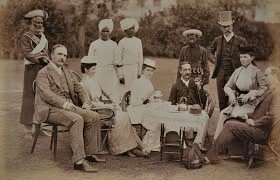
This, at a glance, would perhaps denote the life of unrealistic leisure and comfort of the tea garden memsahib, sitting in her splendid surroundings, drinking coffee and musing about nothing on earth, while liveried attendants appear at the press of a button like the genie in Alauddin’s Magic Lamp, run around to do her every bidding. This should connote a life of endless void in a gilded cage existence where time stands still. But in actual fact, nothing could be farther from the truth. Most ladies in tea, made commendable use of their ample time and resources.
First, they honed in their culinary skills and learned as many skills as they could from their expert chefs or baburchis, as they were commonly called; a rare breed of Chittagong Buddhist cooks. The baburchis and bearers took great pride in their work. Besides churning out the usual home-made butter from cow’s milk; marmalade and other jams and jellies were prepared from freshly picked fruits from the garden; while vegetables were pickled and stored in large glass jars. Some of the ladies also developed the knack of wine-making, a skill which they executed with great pride. Preparation of ham was another lengthy process which normally extended for weeks. Smoked *hilsa was another delicacy the ladies reveled in learning from their baburchis who followed their own unique style. The hilsa fish would be baked in rough-hewn brick-laid ovens.
Most ladies took to gardening with a zeal and spent considerable part of the day supervising the work of the malis.picking up invaluable tips from their seasoned gardeners. Besides the ornamental front lawns with their array of rare and beautiful blossoms, they also maintained very useful kitchen gardens with almost any vegetable for the asking. And not to speak of the orchard gardens placed mostly at the back of the bungalow towards the rear of the rambling grounds.
Then of course, there was the poultry and the dairy to be looked into. Though the ladies never had to sully their hands, unless they chose to, in attending to these matters, they definitely had to keep track of what was going on where. Which cow was ill, which one had a new calf, which one was giving less milk and why—these were all issues that needed to be addressed and held the memsahib’s undivided attention.
Some of the ladies also put their free time to good use by attaining proficiency in painting and fine arts. Their walls would be adorned with their own paintings, mostly oils on canvas, ranging from still- lives and flowers to impressive portraits and exquisite landscapes. Besides painting, many ladies also had a go at making varieties of handicrafts ranging from candle-making to showpieces and embroidery, knitting and crochet and babies’ clothing.
Some of the tea ladies were also excellent sportswomen. Some were ace tennis players, some were formidable at golf while a few were champion swimmers. These athletic ladies would proudly display on their drawing room shelves, the cups and trophies they won at tennis and golf tournaments and swimming gala events at different planters’ clubs.
Talking about Club Do’s and sporting events, these were normally huge affairs rounded off with large servings of snacks, drinks and cuisines. The ladies played a pivotal role in organizing the eatables intricately arranged on spotless white table-cloth, working in close cooperation in arranging the food, cooked by their baburchis, for hundreds of people. They often had the bungalow bearers over to do the serving and arranging. Socializing and entertaining being so intrinsic to the tea social fabric, the ladies were adept at entertaining endless guests and organizing frequent parties at their bungalows.
One favorite pastime of some of the ladies was to collect pieces of interesting looking driftwood from the riversides and have them burnished or painted for elaborate, unique flower arrangements. Some converted chopped pieces of tree trunks into low stools with cushions and placed them before the fireplace, imparting a touch of the wilderness to their snug, stylish living rooms.
So, unlike the neurotic lady in Eliot’s poem, the ladies in tea never asked themselves or others, what they should do to kill time – today, tomorrow or ever.